
Staff Burnout is a Business Risk, Not Just an HR Issue
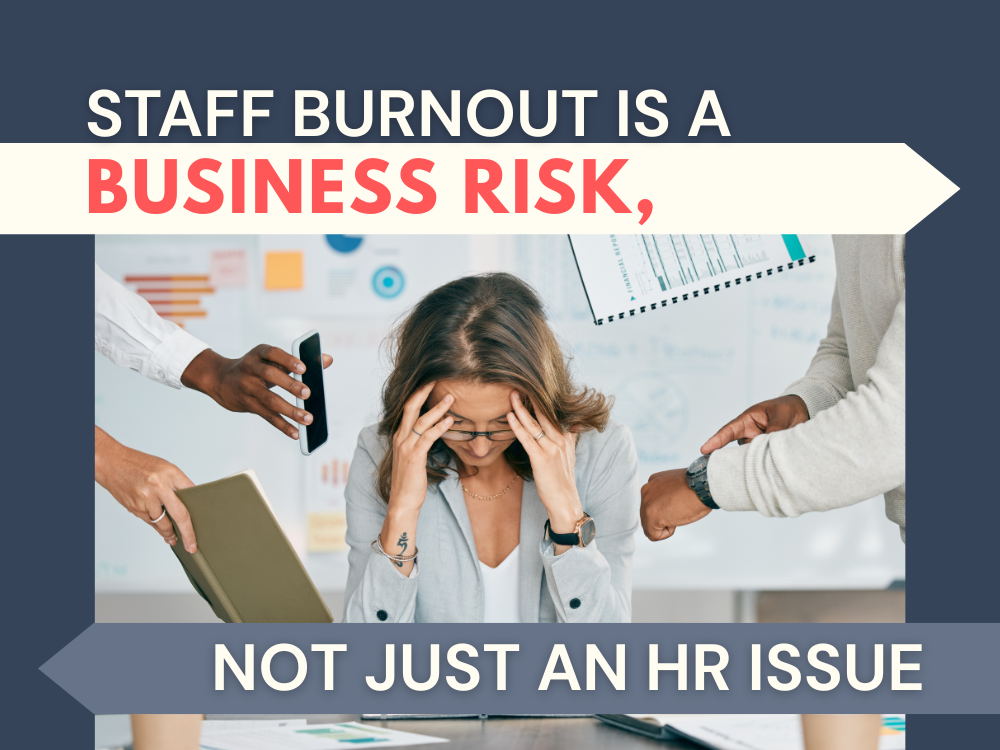
When leaders talk about burnout, it often gets labeled as an HR problem—a morale issue to be addressed with perks, wellness programs, or extra time off. While those efforts have their place, they miss the bigger picture. Burnout isn’t just about employee well-being; it’s a serious business risk that can erode productivity, client satisfaction, and long-term profitability.
Burnout’s Business Impact Runs Deeper
The numbers tell the story. Gallup reports that 76% of employees experience burnout at least sometimes, and more than one in four say they feel burned out “very often or always.” Deloitte’s research echoes this, finding that 77% of professionals have faced burnout in their current role—and nearly half left a job specifically because of it. And according to Forbes, burnout has climbed to record levels in 2025, with two-thirds of U.S. workers reporting symptoms.
Those statistics aren’t just sobering—they’re expensive. Gallup estimates that burnout and disengagement together cost the U.S. economy nearly $1.9 trillion each year. For individual companies, that translates into lost productivity, higher turnover costs, and weakened client relationships. What may start as an employee morale issue quickly snowballs into measurable financial losses.
The Ripple Effects Across the Organization
When burnout takes root, the consequences ripple outward. Exhausted employees tend to work more slowly and make more mistakes, which leads to rework, delays, and frustrated clients. Teams under stress often find it harder to collaborate, which stifles creativity and innovation. Turnover accelerates as burned-out employees look for relief elsewhere, and each departure adds recruiting, training, and lost-knowledge costs. Over time, even a company’s reputation can suffer, making it harder to attract top talent in a competitive market.
In short, burnout doesn’t stay contained within HR—it quietly undermines every part of the business.
How Leaders Can Respond
Addressing burnout requires leadership buy-in, not just HR initiatives. Executives need to look beyond perks and policies and examine the way work itself is structured. That may mean aligning workloads more realistically with available resources, setting clearer priorities so teams aren’t stretched across competing demands, and modeling balance from the top down. When leaders take vacations, respect boundaries, and avoid rewarding overextension, they set the tone for a healthier culture.
But truly strategic leaders go further. They integrate capacity planning into growth initiatives, ensuring that expansion doesn’t overwhelm the workforce. They treat employee engagement as a leading indicator of performance, monitoring it with the same discipline they apply to financial metrics. They view retention as a financial priority, recognizing that the cost of replacing experienced staff far exceeds the investment needed to develop and keep them. And they connect workplace health directly to client experience, knowing that engaged employees consistently deliver stronger results.
In short, tackling burnout isn’t just about caring for employees—it’s about aligning leadership decisions with the financial, operational, and reputational health of the business.
If we invest in well-being and employee happiness, it translates into high performance in every job.”
– Jennifer Moss – Author of the burnout epidemic
Burnout Prevention as Business Strategy
In this sense, preventing burnout isn’t just about caring for people—it’s about protecting the systems that drive revenue and growth. Companies that approach burnout with the same seriousness as financial controls or compliance will not only keep their teams healthier, but also strengthen their competitive position in the market. The evidence from Gallup, Deloitte, and Forbes makes one thing clear: burnout is widespread, it is costly, and it is not going away on its own. Organizations that treat it as an HR box to check will continue to pay the price in disengagement and turnover. Those that approach burnout prevention as a strategic business priority, however, will be better positioned to protect margins, retain talent, and strengthen client relationships.
The bottom line: preventing burnout isn’t just about caring for employees—it’s about safeguarding the long-term success of the business itself. And for forward-thinking companies, addressing burnout isn’t just risk management—it’s a competitive advantage.
Related Articles


